

The LTR visa gives you a 10-year stay in Thailand, a digital work permit, and a flat 17% income tax rate if you qualify as a skilled professional. Here is who each of the four categories is for, what you need to show, and how the application actually runs.
Thailand’s Long-Term Resident (LTR) visa is one of the best visas available in Thailand, and it gives you a 10-year stay in the country. It’s run by the Board of Investment (BOI) rather than by immigration.
It’s a special kind of visa, in our opinion, for a few reasons. Approval comes mainly from the Board of Investment, you don’t renew it every year, and it isn’t tied to a single employer.
Instead, you get five years up front, a five-year extension, and a set of privileges that no tourist or standard work visa comes close to.
In this article, we’ll walk you through what it is, who qualifies, how to apply, and more.
[toc]
Key Takeaways
- The LTR visa runs for 10 years: five years up front, then a five-year extension.
- On top of the 10-year stay, you get benefits such as tax breaks, a digital work permit, and once-a-year reporting instead of every 90 days.
- There are four categories: Wealthy Global Citizens, Wealthy Pensioners, Work-from-Thailand Professionals, and Highly-Skilled Professionals.
- Highly-Skilled Professionals pay a flat 17% personal income tax, and overseas income you bring into Thailand is tax-exempt for LTR holders.
- Every applicant needs US$50,000 in health cover, Thai social security, or a US$100,000 bank deposit held for 12 months.
- The government fee is THB50,000 per person for the visa, plus THB3,000 a year if you need the work permit.
- The official processing time is about 20 working days, but in reality it takes two to four months end to end.
What the LTR Visa Is
The Long-Term Resident visa, or LTR for short, is a 10-year renewable visa introduced in 2022 to attract high-potential foreigners to Thailand. It’s managed by the Thailand Board of Investment, which means everything from approval to extension runs through the BOI instead of a normal immigration office.
LTR Visa Benefits
The LTR comes with a long list of benefits, including:
- 10-year visa: five years first, then extended for another five.
- Digital work permit: the right to work in Thailand, issued digitally.
- 17% flat income tax: for Highly-Skilled Professionals, instead of the normal progressive rate that tops out at 35%.
- Tax exemption on overseas income: income you earn abroad and bring into Thailand is exempt.
- Annual reporting: the 90-day report is replaced by a once-a-year report.
- Multiple re-entry: no separate re-entry permit needed.
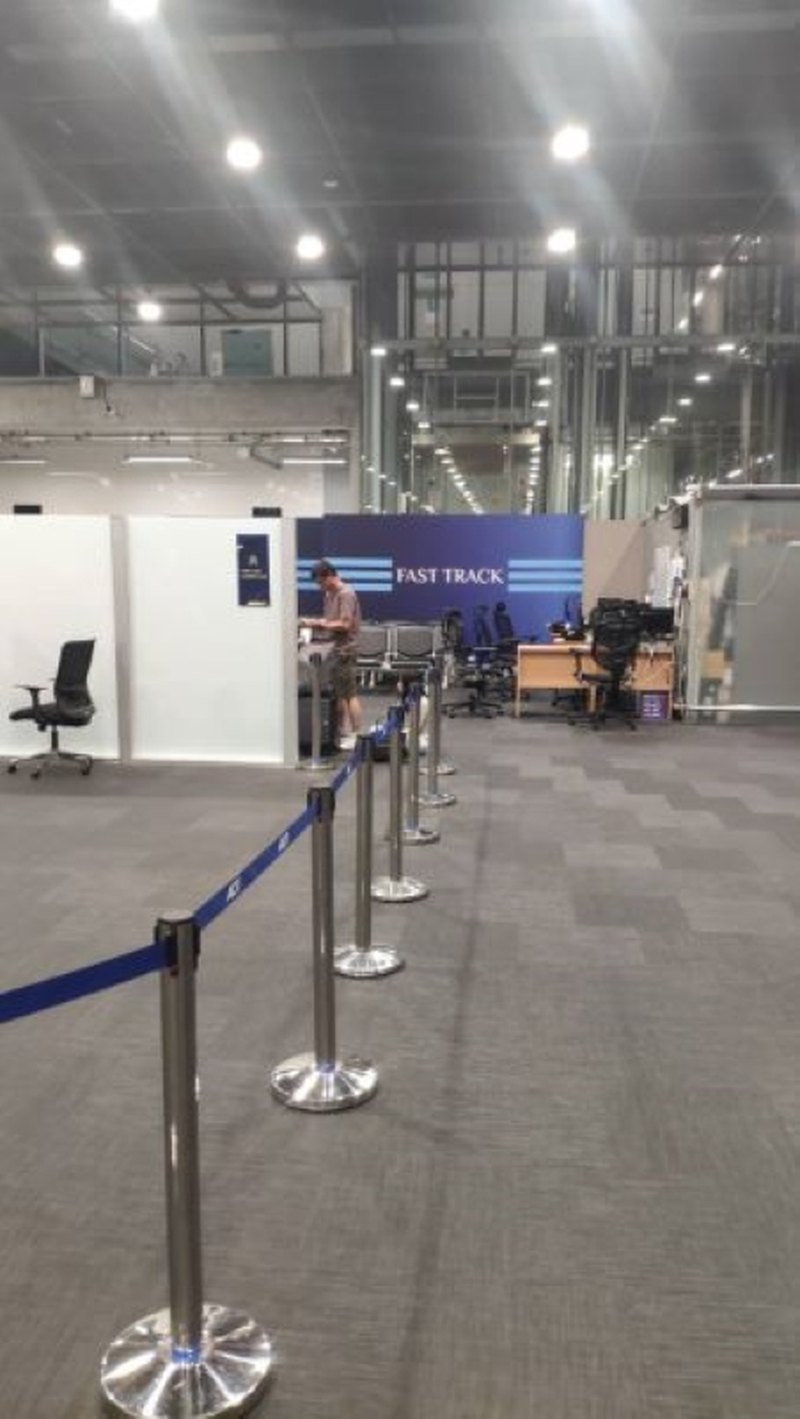
- Airport fast track: priority lanes at Thai international airports.
- Employee quota exemption: LTR holders are exempt from the rule requiring four Thai staff per foreign worker.
- One Stop Service Center: visa and work permit matters are handled at the BOI’s service center in Bangkok, not the usual immigration and labour offices.
Because of these benefits, in our opinion, it’s one of the best visas available in Thailand.
Good to know: Unless you’re working for a BOI-promoted company, the quota exemption matters more than it first looks. A standard work permit normally requires your employer to keep four Thai employees on the books for every foreigner. For a small company, that ratio is often the hardest rule to meet, and the LTR removes it entirely.
LTR Visa Disadvantages
The LTR isn’t for everyone. It has two main drawbacks:
- Requirements: the bar is among the highest of any Thai visa. You can see the full requirements for each category below.
- Application process: it needs more documents than most long-term visas, generally takes a few months, and involves sending paperwork back and forth to the BOI.
Good to know: The LTR is a separate track from the SMART visa and the DTV. Since 2025, the SMART visa is only for startup founders with a certified Thai startup, while the DTV is a cheaper five-year multi-entry stamp with no work permit. The LTR is the only one of the three with a flat tax rate and a 10-year length.
The Four LTR Categories
You apply under one of four categories, each aimed at a different type of person, and each with its own requirements.
Requirements That Apply to Every Category
Whichever category you apply under, you have to meet one health-or-savings condition. You need one of the following:
- Health insurance with at least US$50,000 in coverage, or enrolment in Thai social security (only available to those who work for a company in Thailand) OR
- A bank deposit of at least US$100,000 held for at least 12 months.
Good to know: A couple of points on the insurance route specifically. The policy has to cover medical treatment in Thailand for the full length of your stay, with at least 10 months of coverage left when you apply. It doesn’t have to be a Thai policy: an overseas insurer is fine, as long as the cover is valid for treatment in Thailand. Plain travel insurance isn’t accepted, and a group or employer policy counts as long as it gives you at least US$50,000 of cover.
Wealthy Global Citizens
This category is for people with significant wealth who want to invest in Thailand. You have to meet both conditions:
- Assets: at least US$1 million in global or Thai assets in your name.
- Investment: at least US$500,000 in Thai government bonds (five-year maturity or longer), direct investment in a Thai company, or Thai property.
The investment is where you have a choice. Property is the most popular route, since it gives you somewhere to live in Thailand and counts toward the US$500,000 at the same time. The other routes can be trickier: Thai government bonds, for instance, aren’t always available to buy.
Wealthy Pensioners
This category is for retirees aged 50 and over living on passive income. It’s also the most popular LTR category.
- Age: 50 or older.
- Income: at least US$80,000 a year in unearned or passive income, such as a pension, rent, or dividends.
- Lower-income route: if your passive income is between US$40,000 and US$80,000, you also need to invest US$250,000 in Thai bonds, a company, or property.
Work-from-Thailand Professionals
This is for remote workers employed by an established company based abroad. The employer bar is high.
- Income: at least US$80,000 a year over the past two years, or at least US$40,000 with a master’s degree or comparable expertise.
- Employer: a public company, or a private company with three or more years of operation and at least US$50 million in revenue over the last three years.
Note: you can’t get a digital work permit under this category, since it’s meant for people working remotely for a foreign employer.
Highly-Skilled Professionals
This category is for experts working for an employer in Thailand. It’s also the only one with the 17% flat tax rate.
- Income: at least US$80,000 a year, or at least US$40,000 with a master’s degree in science or technology.
- Employment: a contract with a business, government body, or academic institution in a targeted sector. The list of target sectors now reaches beyond science and technology into a wider set of fields.
Not sure which one fits you? You can check whether you qualify in a few minutes.

Bringing Your Dependents with the LTR Visa
If you hold an LTR visa, you can bring your spouse (you must be legally married) and children under 20 to live in Thailand with you, up to four dependents in total.
Note that each dependent needs the same US$50,000 health cover or Thai social security, or a US$25,000 deposit held for 12 months.
Dependents get their own LTR visa tied to your status. If your LTR visa is cancelled, theirs is cancelled too.
The Application Process
The whole application runs online through the BOI, so you never file at a normal immigration office. It breaks into four stages: apply, get endorsed, collect the visa, and (if you work here) pick up the work permit.
- Register and apply online. Create an account on the BOI’s LTR portal, visa.boi.go.th, choose your category, and upload the evidence for it:
- proof of your assets and Thai investment for Wealthy Global Citizens
- passive-income records for Wealthy Pensioners,
- your employment contract and salary for the two professional categories.
- Everyone also uploads proof of the health-or-savings condition (insurance, Thai social security, or the US$100,000 deposit).
- Qualification endorsement. The relevant government agencies review your file and confirm you qualify. The BOI quotes about 20 working days, though it runs longer if they ask for more documents. When it clears, you receive a Notification of Qualification Endorsement, valid for 60 days.
- Choose where to collect, and book. Within that 60-day window you pick issuance in Thailand or overseas and book your appointment, then print the papers you’ll bring:
- the notification letter
- the TM.94 application form,
- the STM.8 acknowledgement form.
- Miss the 60 days and you have to apply for the endorsement again.
- Collect the visa.
- In Thailand, you collect at the Thailand Investment and Expat Services Center (TIESC), One Bangkok, Rama IV Road, Bangkok. If you’re already here on another visa, such as a Non-B, that visa has to be cancelled first, with enough permission-to-stay left to receive the LTR.
- Overseas, you arrange issuance at a Royal Thai Embassy or Consulate-General, or through the e-Visa system at thaievisa.go.th where it’s available; the fee abroad is usually higher than the THB50,000 and varies by country.
- Work permit, if you work in Thailand. Apply through the same LTR system after the visa is issued. It takes three to five working days, and you collect it at the Department of Employment counter in the same TIESC building. Work-from-Thailand Professionals don’t get one, since they work remotely for a foreign employer.
Good to know: Although the visa is billed as 10 years, immigration stamps the first five years into your passport. Before that runs out, the BOI re-checks that you still meet the requirements (for example, that a Wealthy Global Citizen still holds the US$500,000 investment), and then grants the second five years.
A Week-by-Week Timeline
No two applications run at the same pace, but a well-prepared one tends to follow this rhythm. Treat it as the smooth-case version.
Weeks 1–2: Gathering documents
- Files are submitted digitally, with PDF the preferred format.
- Documents in English or Thai are accepted as they are; anything in another language needs a certified translation.
- Financial documents should be recent, usually from the last three to six months.
- Employer paperwork, for the professional categories, often takes the longest to coordinate and is a common source of delay.
Week 3: Submission
- Your file is checked in full, then submitted through the BOI portal.
- You usually get an acknowledgement within 24 to 48 hours.
Weeks 4–7: BOI review
- The agencies assess your qualifications against your category.
- Expect follow-up requests: proof of employer revenue, tax clarifications, or asset valuations are the usual ones.
Week 8: Approval and issuance
- The BOI issues your endorsement, valid for 60 days.
- You collect the visa in Thailand or at a Thai embassy abroad.
That eight-week picture is the smooth version. Ask anyone who has actually been through it and you’ll hear the same thing: the endorsement step really is quick on paper, but the realistic end-to-end timeline is two to four months once documents start going back and forth between you and the agencies.
Tip: Incomplete documents are the single biggest reason an application stalls, so it pays to get your paperwork complete and translated before you submit, not after an agency asks for more.
Cost
These are the government fees only.
| What you pay for | Cost |
|---|---|
| LTR visa (per person) | THB50,000 |
| Digital work permit (if you need it) | THB3,000 a year |
If you’d rather have an agent handle it for you, agent fees run around THB20,000 to THB60,000, depending on how complex your situation is. You can contact us for an estimated quote.
LTR Versus Other Long-Stay Options
The LTR isn’t the only way to stay in Thailand long term. Here’s how it compares with the main alternatives.
SMART Visa
Since 2025, the SMART visa is only for startup founders with a certified startup in a targeted industry. It runs up to two years rather than ten, and it doesn’t come with the flat tax rate. The investor, executive, and skilled-professional routes that SMART used to cover have moved to the LTR.
So if you’re building a certified startup, look at SMART; for most other cases, the LTR is now the route.
Destination Thailand Visa (DTV)
The DTV is cheaper and quicker for remote workers who don’t meet the LTR income bar. It’s a five-year multi-entry stamp, but it carries no work permit and no tax benefit, and each stay is capped at 180 days before you have to leave and re-enter.
Thailand Privilege (Elite) Visa
The Thailand Privilege visa is a paid-membership visa with no income test and no work rights. You pay a membership fee instead of meeting income or investment conditions, which suits people who want a long, hassle-free stay without working.
However, the cost is high as well, starting at THB650,000 for a 5-year visa.
Retirement Visa (Non-O / O-A)
The standard retirement route for over-50s asks for either THB800,000 in a Thai bank account or THB65,000 a month in income. It’s cheaper to qualify for than the LTR’s Wealthy Pensioner category, but you renew it every year, report your address every 90 days, and can’t work on it. The LTR replaces all of that with a 10-year stay and once-a-year reporting.
Non-B Visa
The Non-B is the normal work visa. Your employer sponsors it, and it usually requires the company to hold THB2 million in capital and employ four Thai staff for every foreigner. You renew it yearly and report every 90 days. The LTR removes the employee-quota rule and the annual renewal, which is why a lot of people setting up or joining a company look at it closely.
Who Should Get the LTR Visa
The LTR is worth the extra paperwork if you fit one of these profiles:
- You’re a retiree over 50 with a solid passive income, and you’re tired of the yearly retirement-visa renewal and the 90-day reporting.
- You’re a high earner working for a Thai employer in a targeted sector, where the flat 17% tax rate saves you real money against the normal progressive rate.
- You’re a remote worker on a strong salary for a large overseas company, and you want a stable, decade-long base in Thailand.
- You have significant assets, or you want to invest in Thai property, and you’d like a 10-year visa to come with that investment.
If you’re setting up or joining a company in Thailand, it’s worth weighing the LTR against a work permit under BOI promotion, which brings its own visa and quota benefits.
Not sure which LTR category fits you, or whether an LTR visa or a BOI work permit is the better route? You can check whether you qualify or get matched with a firm that handles the whole application.
Do You Need an Agent to Apply?
Legally, no. The LTR is a do-it-yourself online application, and plenty of people file it themselves without paying anyone. The BOI’s portal is free to use, and the government fee is the same whether or not you use an agent.
Still, most applicants we talk to end up using help, for a few practical reasons:
- The document list is long, and much of it (income proof, employment letters, asset statements) has to be translated, formatted, and sometimes notarised before the BOI will accept it.
- Incomplete paperwork is the single biggest reason applications stall, and a back-and-forth with the agency can add weeks.
- Choosing the right category, and the right qualifying route within it, isn’t always obvious, and picking wrong can mean re-applying from scratch.
If your situation is straightforward, with clear income, one obvious category, and documents already in order, doing it yourself is realistic. If it’s more complex, an agent usually pays for itself in time saved and mistakes avoided.
We can match you with a firm that handles the whole LTR application from start to finish. Check whether you qualify or get matched with a firm to get started.
Thinking about setting up with BOI?
BOI Connect matches foreign business owners with a vetted firm that handles the whole thing, from company registration to visas, tax, and ongoing compliance.