

So your activity qualifies for BOI promotion and you’re ready to apply. What actually happens next, how long it really takes, and what it costs you? Here’s the honest walk-through, from the first form to the certificate in your hand.
The good news is that applying to the Board of Investment is more structured than most people expect, and there’s no government fee to apply. The part that trips people up isn’t the BOI.
It’s getting your own paperwork ready and being realistic about the calendar. We’ll walk you through both.
Key Takeaways
- There’s no government fee to apply for BOI promotion. Your real costs are professional help, company registration, visas, and ongoing accounting.
- The BOI reviews your project in 40 to 90 working days depending on its size, but that’s only one part of the journey.
- Plan for four to six months end to end. The slow part is almost always your own document prep, not the BOI.
- Once approved, you accept within one month, register your company, then collect your certificate.
- Budget realistically: professional fees usually run THB100,000 to THB500,000, plus annual compliance from around THB50,000.
- You can apply yourself, but most founders use a firm to avoid the back-and-forth that stretches the timeline.
Before You Apply
Before you touch the application, get three things straight:
- your activity qualifies
- your capital is in order
- your business plan can stand up to questions.
The activity check matters most. BOI promotes specific activities from its list, not businesses in general, so confirm yours is on it before you spend a week on anything else. Your project also needs at least THB1,000,000 in capital, excluding land and working capital, and a debt-to-equity ratio (how much of the project is funded by debt versus your own money) no worse than 3:1 for a new company.
If you’re unsure whether your activity fits, you can run the project past a BOI officer informally before you file. This pre-screening isn’t mandatory, but it confirms you’re aiming at an eligible activity and can meet the financial criteria before you invest time in the full application.
The application form itself is short, only about eight pages. To fill out the form, you will need a clear business plan, financial projections, and a sensible estimate of how many people you’ll hire. This is where you should spend your time, because a thin plan is the most common reason an application drags.
Good to know: You don’t have to hand over the capital in cash up front. The BOI wants to see that your project is properly funded and structured, not that the money is already sitting in a Thai bank account on day one.
What the BOI Is Really Looking For
The form is the easy part. What decides your application is whether the project is a genuine fit for what the BOI wants to promote.
In our experience, the BOI mainly looks at whether your project falls within a promoted activity and delivers real economic value to Thailand. That comes down to:
- its sector
- its investment level
- the jobs it creates
- the technology transfer or innovation it brings
- its overall legal and financial compliance.
It also weighs the quality of the application itself: how well you’ve prepared, and how solid your documentation is.
In practice, that rewards precision. The strongest applications name the exact promoted activity that matches what the company will actually do, back it with realistic numbers, and tell one consistent story across the business plan, the financials, and the corporate documents. Describing your business too broadly, or stretching to fit a category that sounds attractive but doesn’t match your operations, is where applications start to wobble.
The professional fee is the one that varies most, because it tracks how complex your activity and structure are. A straightforward software company sits near the bottom of that range; a manufacturing project with imported machinery and several foreign hires sits nearer the top. Whatever you’re quoted, keep a buffer of 10% to 20% for translations, notarizations, and the odd extra document.
The Online Application
You submit standard new-project applications through the BOI’s online e-Investment Promotion System, which is the required channel for ordinary applications. A few special application types (production-efficiency improvement, business transfer, and social or local development) are still handled on paper.
You’ll register, complete the application for your chosen activity, and upload the documents that back up your plan and your capital:
- a detailed business plan with financial projections
- a shareholder list with nationalities
- a description of your process or technology.
Meeting
Once the BOI accepts your submission, you contact the responsible officer to book a project-clarification meeting, usually within about ten working days. It runs around an hour, and the officers ask you to walk through your product or service, who your customers are, how the project benefits Thailand, and the numbers behind it.
Treat that interview as a real step. It’s your chance to show the officers that the plan on paper is a plan you actually understand. Founders who walk in able to explain their numbers tend to move through faster than those who leave it to an adviser to answer everything.
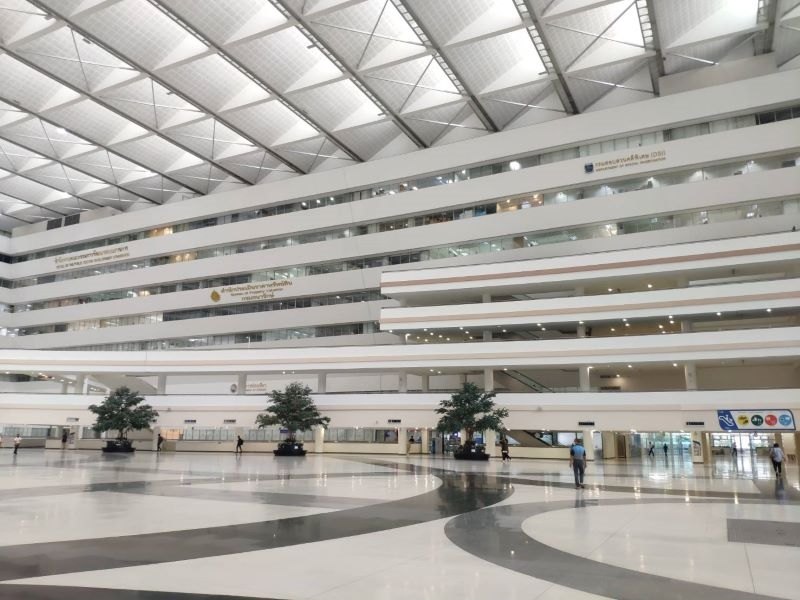
Good to know: It used to be that the investor had to show up in Bangkok in person, and the BOI still likes to meet the actual person behind the project rather than only an adviser. Since the pandemic, though, the meeting can be held at the BOI office or by video conference, arranged with your officer, so you no longer have to fly in just for this step.
The Review Windows
How long the BOI takes to decide depends on how big your project is. The Board sets these working-day targets for the review itself:
| Project investment | Review time | Decided by |
|---|---|---|
| Up to THB200 million | 40 working days | Working group |
| THB200 million to 2,000 million | 60 working days | Sub-committee |
| Over THB2,000 million | 90 working days | The full Board |
Most first companies sit comfortably in the top row. Projects over THB2,000 million also have to submit a feasibility study, which is a bigger piece of work in its own right. When the BOI reaches a decision, it notifies you in writing within about seven working days.
Accepting the Promotion
An approval isn’t the finish line. It’s a resolution you have to accept.
You confirm acceptance within one month of being notified, and if you need more time you can extend that, up to three times. Miss the window without extending and you can forfeit the offer, so put the date in your calendar the moment approval lands.
The Promotion Certificate
After you accept, you register your Thai company with the Department of Business Development if you haven’t already. A promoted company needs at least three shareholders, with at least a quarter of the registered share capital paid up; foreign-majority BOI projects normally bring that capital in from overseas.
For a foreign-majority project, that capital has to be remitted into Thailand from overseas, sent in the investor’s name to the promoted company’s account. You show proof of the transfer when you apply for the certificate, so plan on getting the money in within about four months of accepting the promotion. If you need longer, you can ask the BOI to extend that window.
Then you apply for the actual Promotion Certificate. You have six months from acceptance to file that application, and once your documents are complete the BOI issues the certificate within about ten working days.
That certificate is the document that unlocks everything: the tax holiday, the duty exemptions, the right to full foreign ownership for your activity, and the easier visas and work permits. Keep it safe, because you’ll reference it constantly.
How Long It Really Takes
Here’s where the official numbers and real life part ways. The 40-to-90-working-day figure is the review step alone.
Ask anyone who’s actually been through it and they’ll tell you to plan for six to nine months from first preparing the application to a company that’s registered, staffed, and operating under its promotion.
Here’s the whole thing at a glance, from first paperwork to a live promotion:
| Stage | Rough timing |
|---|---|
| Prepare the plan, financials, and documents | 2 to 4 weeks |
| Submit online, then schedule the clarification meeting | Meeting within about 10 working days of acceptance |
| BOI reviews the project | 40 to 90 working days by project size |
| Written decision | Within about 7 days of the resolution |
| Accept the promotion | Within 1 month, extendable |
| Register the company and bring in capital | Capital in within about 4 months; certificate filed within 6 months |
| Certificate issued | Within 10 working days of complete documents |
The gap isn’t the BOI dragging its feet. It’s the parts around it:
- pulling together a solid plan and financials, which on its own tends to take two to four weeks
- waiting on documents from overseas
- getting translations done
- the company registration and visa steps after approval.
In the business forums, the same advice comes up again and again: the applicants who move fastest are the ones who front-loaded their paperwork, and the ones who stall are almost always waiting on their own documents.
That’s also why most founders don’t do it entirely alone. You can absolutely apply yourself, and plenty do, but a firm that files these every week knows what the officers want to see and heads off the back-and-forth that stretches a three-month process into six. Whether that’s worth it depends on how much your own time is worth to you.
After Approval
Once you have the certificate, the promotion becomes a live thing you have to maintain. That means:
- applying for your visas and work permits through the One Stop Service Center
- filing regular progress reports through the BOI’s e-Monitoring system (now quarterly, since a 2026 change)
- importing any machinery under the duty exemption within 30 months of the certificate date
- getting the business fully operating within 36 months.
None of that is difficult if you plan for it, but it is ongoing, and it’s why a BOI company carries a bit more admin than a plain Thai company. The tax holiday you’re getting in return usually makes that trade an easy one.
Thinking about setting up with BOI?
BOI Connect matches foreign business owners with a vetted firm that handles the whole thing, from company registration to visas, tax, and ongoing compliance.